
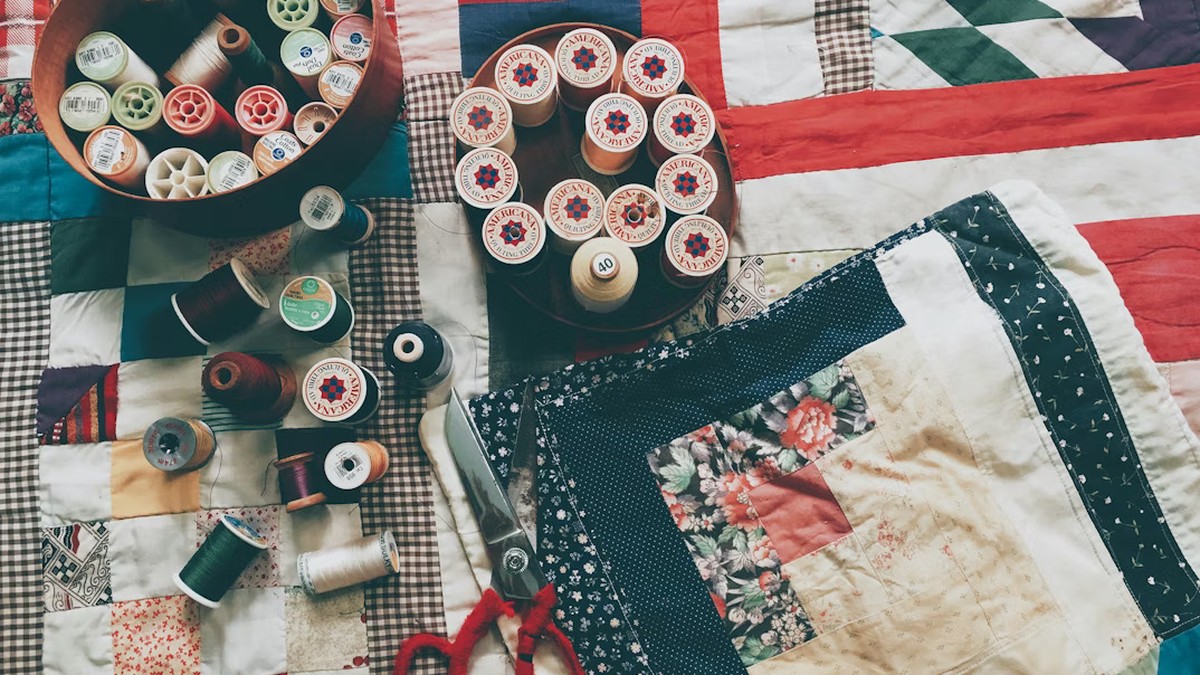
When sewing gets messy, it’s easy to stop sewing at all.
A short reset can turn clutter into a clear next step without trying to organise your entire life.
This guide offers a 30-minute routine that gets you back to making.
A sewing space can quietly drift from “creative corner” to “avoidance zone”. It happens fast: a fabric sale, a few urgent mends, a project that stalled. Then every time you walk past, the mess asks a question you don’t want to answer.
This reset is designed to be short and kind. You are not aiming for perfection. You are aiming for momentum and a clear next action.
Set a timer and protect the boundary
Set a timer for 30 minutes. Tell yourself you are allowed to stop when it ends. That’s the whole trick. The timer turns the task into a contained session instead of an endless obligation.
Grab two bags or boxes: one for “put away” and one for “not sure yet”. The second one is important because it prevents you from getting stuck making decisions.
Do a quick surface sweep
Clear the cutting mat, the machine bed, and the floor around your chair. Put obvious rubbish straight in the bin. Put tools back in one container. If you can’t find their “home”, put them in a temporary cup. You can create permanent homes later.
This is also a good moment to check supplies if you’ve been sewing frequently. The state of fabric and notions is a reassuring reminder that shortages and gaps happen, and planning around what you have can be more effective than chasing the perfect supply list.
Choose one project to be “current”
The fastest way to restart sewing is to choose one project and declare it current for the next week. Not forever. Just next week. Place it in a tray, tote, or basket.
If your current project is a practical staple like masks, it helps to keep the pieces together so it doesn’t become a repeated re-start. If you want a clear overview of patterns and approaches, Masks is a useful hub to revisit.
Create a three-zone system (no fancy organisers needed)
Zones reduce decision fatigue. Use any containers you already own. A shoebox counts.
- Zone 1: current project (all pieces and notes live here).
- Zone 2: tools (scissors, clips, seam ripper, measuring tape).
- Zone 3: fabric in play (only what you’ll touch this month).
Everything else goes into storage or into your “not sure yet” box. You are allowed to postpone the big sorting decisions.
Restock the small things that block you
Small missing items can stop a whole session: an empty bobbin, a dull needle, a missing seam ripper. Spend five minutes replenishing the basics. Wind two bobbins in a neutral thread. Replace the needle if you can’t remember when you last changed it. Put a pack of pins or clips in the tool zone.
If your sewing has been mask-heavy, your habits might already be built around speed and repetition. Still sewing masks every day? You can too captures that rhythm and can help you set up a “batch sewing” mindset for other projects as well.
Make the next step visible
The end of the reset should leave you with one visible next action. That could be “cut lining pieces”, “press seams”, or “thread machine and test stitch”. Write it on a sticky note and place it on the current project tray.
This small move matters because it removes the start-up friction. Next time you sit down, you won’t have to decide what to do. You will just do the next step.
What to do with the “not sure yet” box
Do not open it today. Label it with a date two weeks from now. When that date arrives, set a 20-minute timer and sort only what you can quickly decide. If you still can’t decide, it can stay boxed. The goal is to prevent the box from becoming a permanent guilt object.
A short weekly maintenance routine
To keep your space from slipping back into chaos, do a five-minute reset at the end of any sewing session. Put tools into the tool zone, put scraps into a scrap bag, and return the current project to its tray.
Five minutes feels small, but it protects your next session. It keeps sewing feeling like something you can step into easily rather than something you have to fight your way into.
Why a calm reset works
Organisation is often treated like a personality trait. It’s not. It’s a set of tiny repeated actions. A calm reset gives you control without demanding a new identity.
When your machine is accessible, your tools are findable, and one project is ready to move, you’ll sew more. And sewing more is the real goal, because making is what makes the space feel like yours again.